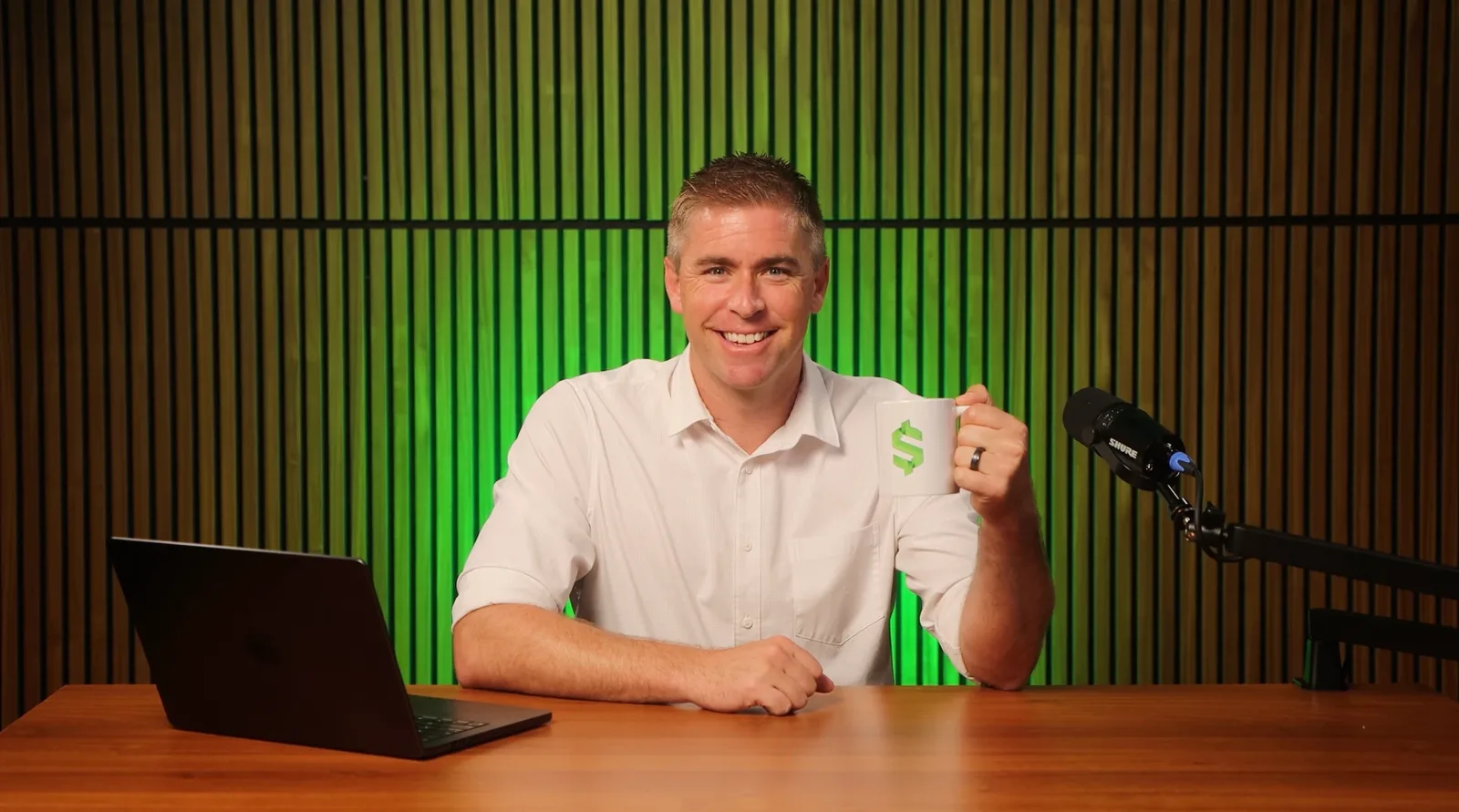
Why there's no single price
I've been a professional video spokesperson since 2015. I've made 1,000+ videos for 250+ B2B brands. And the honest answer to "how much does it cost?" is still "it depends." Not as a dodge. The price swings with a handful of things you can actually control.
It depends on who you are. A small business buying one explainer is a different job from an enterprise buying a training library.
It depends on scope. One 60-second video read off a script is not the same as a campaign with three hooks, a custom location and cutdowns for every platform.
It depends on turnaround. Need it in 48 hours? That costs more than two weeks.
And it depends on where it's filmed. A spokesperson in their own home studio is cheap to book. Sending them to your office, a rented studio or a location out in the world means travel, a videographer, and more crew. (Pricing an explainer specifically? Here's what drives explainer video cost.)
The three price tiers you'll find
Freelance marketplaces: $50 to $500 a video
This is where most people start, and it's fast and cheap. Most freelance spokespeople price by word count, which makes sense, because word count is the cleanest way to price a read.
About half of them film on green screen. The rest have a set look of their own: a home office, a content-creator setup, or the selfie-style UGC look. UGC is its own world, so don't confuse it with spokesperson work.
Some of these freelancers are genuinely good. Plenty aren't. The trade-off is choice. You get speed and price, but not much control over the quality you end up with.
Top providers: around $2,000 a video
At the top of the market are people who've done this for a living somewhere else first. Dashti Media is one of the best I've seen. Co-founder Kezhal Dashti is a former TV news anchor. Very natural, very credible. Their published price is $2,000 for a single video, shot in their green screen studio or a modern set, with basic editing, commercial licensing and one reshoot included.
At this level, check what's in the scope. Some top providers include editing. Some just hand you the raw read. Two quotes at the same price can be very different deals.
Talent agencies and production companies: day rates plus everything else
Step up again and you're working with actors booked through a talent agency. That's usually how production companies and video agencies cast. The actors are arguably better, because agencies vet them and they act for a living.
The pricing changes too. Instead of per video, you're paying a day rate, a half-day rate, or a fixed fee with usage built in. For reference, SAG-AFTRA's union contract for corporate and educational video (Nov 2025 to Oct 2028) sets the minimum for an on-camera actor at $673 to $837 a day, or $437 to $544 for a half day. That's just the performer. Agency fees, the production crew, editing and usage all sit on top.
You also pick up friction that has nothing to do with money:
- Agency fees and back-and-forth on the booking
- Scheduling and availability conflicts
- Getting the actor back into the studio when a revision needs a new line
- More rates, and more discussion of usage, every time the video changes
For a quick video, that whole process gets long and slow.
What actually explains the gap
When I started, I thought the price gap was about the background and the camera quality. It isn't. Those matter, but they're the easy part now.
The real difference is experience. Someone who has done this hundreds of times knows your ideal customer, knows your market, and takes the time to learn the business and what the video is meant to do. It's a lot more than hopping in front of a camera.
And the biggest piece of all is the messaging. The script decides whether the video is believable and whether it hits the right audience. A truly dedicated video spokesperson gives you two unfair advantages:
- Authenticity. It doesn't feel like they're reading cold, whether it's a teleprompter or bullet points.
- The full message. Everything you need said gets said, the way you need it said.
When you don't have those, you're leaving it to guesswork.
The cheap option that costs more
The cheapest option in 2026 isn't a freelancer. It's an AI avatar.
Fyntra connects US legal claimants with funding, and their earlier ads leaned on AI-generated content. They weren't getting a good return. Engagement and click-throughs were poor, because people could tell. What they were missing was a real human. We added that human element to their ads, and the result was 22 quality leads in 7 days and a 4x lift against their previous AI-only ads. Read the Fyntra case study, or see how I structure B2B video ads so they last.
That's the pattern I keep seeing, especially in B2B. AI is great for production. Use it to draft scripts with a human check, or to speed up editing. But the human on screen is where trust lives, and trust is the thing that's costing companies the most this year. When your audience spots an AI avatar, the time you saved turns into reputation you lose. More on that in AI avatars for B2B.
The same goes for a spokesperson who doesn't believe in or understand your product. You can usually tell on camera.
Where the money really goes
By the time most companies look for a spokesperson, they've already paid for strategy. There's usually a creative strategist and a script, and they need someone to deliver it. Nobody on the team has the time, energy or desire to be on camera, so they go to the next best thing.
Here's what that "next best thing" usually costs to run through a production company:
- Casting and booking. The company books talent through its agencies, around availability.
- Location. If it's not filmed in a studio the presenter already has, someone books one.
- The shoot. Crew, setup and the day itself.
- Post-production. Editing takes a while, especially with motion graphics or product screens.
- Revisions. One reviewer or a whole committee, depending on the company. This is where the red tape lives.
- Repurposing. Cutdowns for social, different lengths and aspect ratios.
Buyers forget the back half. Revisions and repurposing are where budgets stretch and timelines slip.
It doesn't have to be that slow. When the spokesperson has their own setup and handles everything from the script through post-production, the whole thing can be done remotely. We work that way. Yes, the first video takes longer, because we're getting your branding right. Every video after that moves fast.
My one tip: build a branded asset library first
If you don't have one yet, start with a library of branded assets: logo animations, lower thirds, colors, and especially motion graphics. A motion graphics library is the unfair advantage for keeping your brand consistent across every video. Once it exists, all you add is the human, and you're ready to go.
Usage rights: the hidden cost
Usage is the part most buyers don't ask about until it bites. Usage rights spell out where a video can run and for how long.
In the union world, usage is often time-based. SAG-AFTRA's commercial contract, for example, prices digital usage in 4-week and 13-week windows. Outside the union, you'll see deals for 6 months, a year, or unlimited online use. Most spokesperson footage is licensed for the specific video and project it was made for.
That matters more now because of AI. Celebrities are already having their faces and voices used without consent, and spokespeople are no different. So I hold firm on a few rules. The footage is for your project and your videos, and cutting it into shorts and snippets for the same campaign is fine. No AI duplication of my likeness or voice, no voice manipulation, and no training AI on my look. TV, film and radio need a separate license.
The good news: with a reputable spokesperson, usage is a conversation, not a trap. If an ad is still working after a year, extending it should be a simple buyout.
How to set a fair budget and compare quotes
If you asked me over coffee, here's what I'd tell you.
Start by knowing who you're looking for: the demographic that matches your audience, and the consistency and quality you need across every video. Keep your production process as simple as you can. The fewer handoffs, the better the video.
Look for someone communicative who brings you solutions, not a commodity that says "here's your video, see you later."
Ask every spokesperson these four questions:
- Where can we film, and what locations do you offer?
- What are the usage rights, and what does it cost to extend them?
- What do you know about our topic and our industry?
- Are you available for long-term work?
The full checklist, with casting briefs and what to look for in a reel, is in my free spokesperson hiring playbook.
The biggest red flag is the cheapest quote. You want someone reputable who delivers quality consistently and authentically. Authenticity plus consistency is what builds trust.
When cheap is genuinely fine
If you're just starting out and you need a human face on green screen that beats an AI avatar, a good marketplace freelancer is a fine first step.
But once video is a real part of how you sell, train or launch, a dedicated video spokesperson on a branded set, with the production handled, beats green screen freelancers every time. If that's where you are, here's how a dedicated video spokesperson works, or start on the VideoRep homepage.
Most freelance video spokespeople charge $50 to $500 per video, usually priced by word count. Top providers, like former news anchors, charge around $2,000 a video, sometimes with editing and licensing included. Agency-booked actors are usually paid by the day, plus fees, production and usage.
Under SAG-AFTRA's 2025 to 2028 corporate and educational contract, the minimum day rate for an on-camera actor is $673 to $837, or $437 to $544 for a half day. Agency fees, crew, editing and usage rights are extra.
No. An AI avatar is cheaper up front. But in B2B, audiences often spot AI and trust drops. Fyntra saw a 4x lift when it replaced AI-only ads with a real human spokesperson.
It depends on the usage agreement. Most spokesperson footage is licensed for the specific project and videos it was made for, often for a set period online. TV, film and radio usually need a separate license. Always get usage, and any AI restrictions, in writing.
Want a dedicated video spokesperson?
Book a free 30-minute fit call. We'll look at the videos you need, and you'll get a quote within 24 hours.
Book a Fit CallFAQ
How much does a video spokesperson cost per video?
How much does it cost to hire an actor for a corporate video?
Is a video spokesperson cheaper than an AI avatar?
Who owns the footage from a spokesperson video?
- SAG-AFTRA 2025-2028 Corporate/Educational and Non-Broadcast rate sheet (effective 1 Nov 2025): on-camera Day Performer $673 (Category I) / $837 (Category II); Half-Day $437 / $544. Commercials digital usage is priced in 4-week and 13-week cycles. See sagaftra.org.
- Dashti Media published pricing, retrieved 27 Oct 2026: $2,000 individual video including studio, crew, talent, commercial licensing, basic editing and one reshoot. See dashtimedia.com/pricing.
- Internal client data: Fyntra, 22 quality leads in 7 days and a 4x lift against previous AI-only ads. See the Fyntra case study.