




The site demo
Sixty to ninety seconds on the homepage or product page. Its only job is to make a visitor understand what this is fast enough that they keep reading.
- 60 to 90 seconds
- Presenter plus screen capture
- Cut for autoplay without sound
A screen recording shows what the product does. A person showing you the product tells you why the next click matters. The difference is the gap between a feature tour and a demo that sells.
Trusted by teams at
The default product demo is a screen capture with a voiceover walking through the interface in the order the navigation happens to be arranged. It documents the product accurately and persuades nobody, because it answers 'what does this do' when the viewer is actually asking 'is this worth changing my workflow for'.
A demo that sells is structured around a job the viewer is trying to finish, not around your menu structure. It starts in the problem, moves through the product only as far as necessary to resolve it, and skips every feature that does not serve that story. Most of your product does not appear, and that is correct.
Putting a presenter on screen alongside the capture changes the register from documentation to guidance. Someone is walking you through it, deciding what matters, and taking responsibility for the claim that this is better. That is a different experience from watching a cursor move.

Same product, three very different jobs.
Sixty to ninety seconds on the homepage or product page. Its only job is to make a visitor understand what this is fast enough that they keep reading.
Longer, sent by a rep or embedded in a proposal. Handles the objections that come up on real calls, in the order they come up, so the rep is not repeating themselves.
Post-purchase. Reduces support tickets and time-to-value, and does not need to sell anything, which changes the whole tone.
People watch a product demo to decide something. Usually whether this is credible, whether it fits how they already work, and whether they would look sensible recommending it internally. Feature completeness is almost never the deciding factor, but it is what most demos spend their runtime on.
Which means the most valuable thing a demo can do is show the product failing to be complicated. Watching someone finish the task quickly answers the real question directly, where a feature list only implies an answer.
Buildium's presenter-led explainers ran at 2.6 to 3.8 times the channel median, with the first video ranking fifth of 51 uploads on the channel since April 2025. Eleven videos across nine separate contracts followed, which is the more meaningful signal: the first one worked well enough to keep going.

Every figure below is taken from the client's own case study page.

Eleven explainers across nine contracts, with raw files returned in one to three days each time.

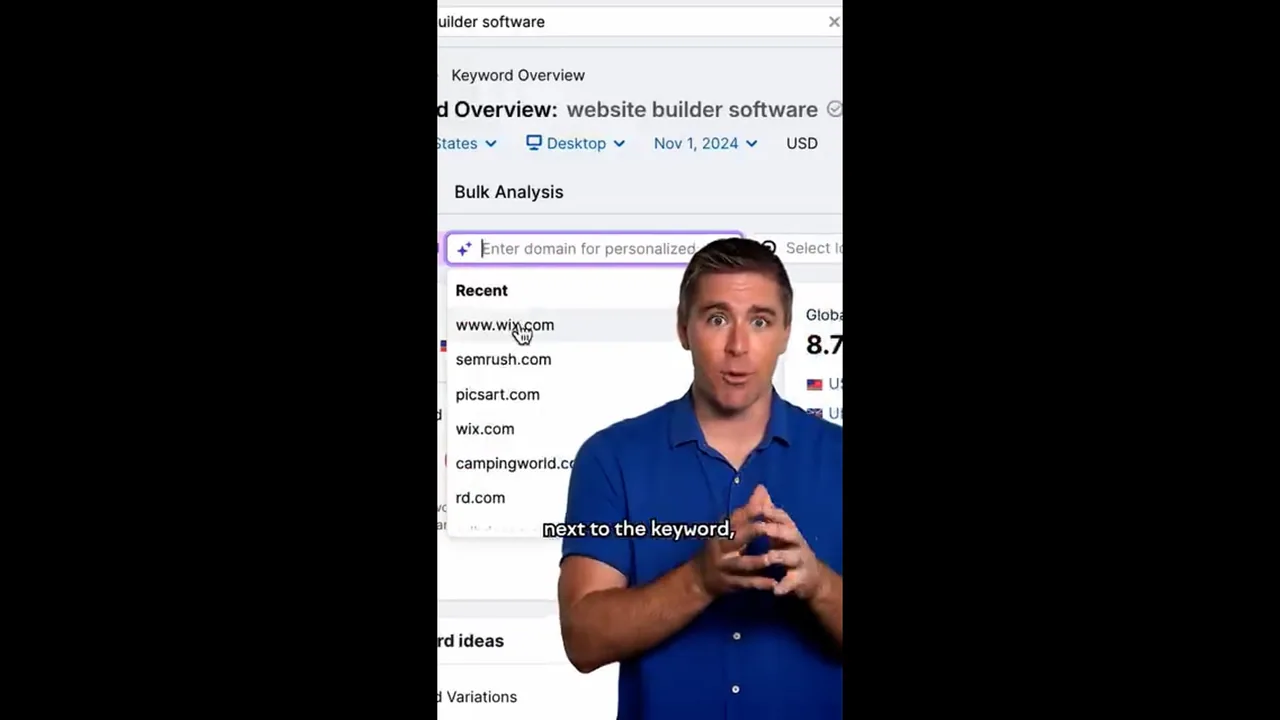
A single-take spot for Semrush marketing, approved by the team on the first delivery with no revision round.
"He comes in with great energy. Knows how to look good and sound good on camera, and takes direction very well."
Randy Mitchell, Semrush

Forty-plus presenter videos across ten bookings over three years, including product content and paid social cutdowns.
"Eric has a very quick turnaround time and delivers professionally."
Kieran W, Workvivo by Zoom
We choose the single task the demo will follow end to end. Not a feature list. The narrower this is, the better the demo performs.
Script written against that job, with the exact screen states we need captured. You approve before anything is filmed.
Presenter filmed in studio, product captured cleanly. Batched if you need several demos, which is usually cheaper.
Edited together, captioned, chaptered, cut for site, sales and social. Unlimited revisions until it is right.
The most common failure in product demo video is length driven by internal politics rather than viewer need. Every team wants their feature represented, the runtime inflates to accommodate them, and the finished video serves the org chart instead of the buyer.
A site demo has sixty to ninety seconds before a visitor decides to keep browsing or leave. A sales-cycle demo has longer because the viewer has already opted in, but even there, chaptering matters more than completeness because buyers skip to what they care about.
The practical test: if a feature does not help the viewer finish the job the demo is following, it belongs in a separate video. Making three focused demos almost always outperforms one comprehensive one.
One practical decision decides more than the script: whether the demo shows real data or an empty sandbox. Demo environments built for screenshots tend to contain three records and a placeholder name, and viewers read that instantly as a product nobody uses. Populating the environment with realistic volume before capture costs an afternoon and changes how substantial the product looks on screen.
The second decision is pace. Software demos are almost always shown too slowly, because the person recording knows where every button is and is being careful. Viewers do not need to follow every click; they need to believe the task got finished. Cutting the dead motion between actions makes a two-minute demo feel like thirty seconds of competence rather than two minutes of navigation.
Usually yes, for screen capture, or you provide the recordings and we build around them. A sandbox account with realistic data works best. Empty demo environments look empty on camera and undercut the whole video.
Sixty to ninety seconds for a site demo. Longer for a sales-cycle demo where the viewer has opted in, but chaptered so they can skip. If your demo is ten minutes because five teams wanted representation, it is serving the org chart rather than the buyer.
You can, and it will underperform. Three focused demos following three real jobs beat one comprehensive tour almost every time, because viewers watch to decide something specific rather than to learn the interface.
Plan for it. We keep the structure modular so an individual section can be recaptured and swapped without reshooting the presenter for the whole video. Buildium ran eleven videos across nine contracts as the product evolved.
Usually. The hardest part is choosing what to leave out, which is easier for someone outside the company. If you have a script we will read it and say honestly what we would cut.
Yes, and cutdowns are often part of the same engagement. Workvivo went from approval to a live Meta lead-gen ad in nine days using this material.
Tell me the job your buyer is trying to finish. That is the demo.