Should Your CEO Be on Camera?
Yes, whenever they can.
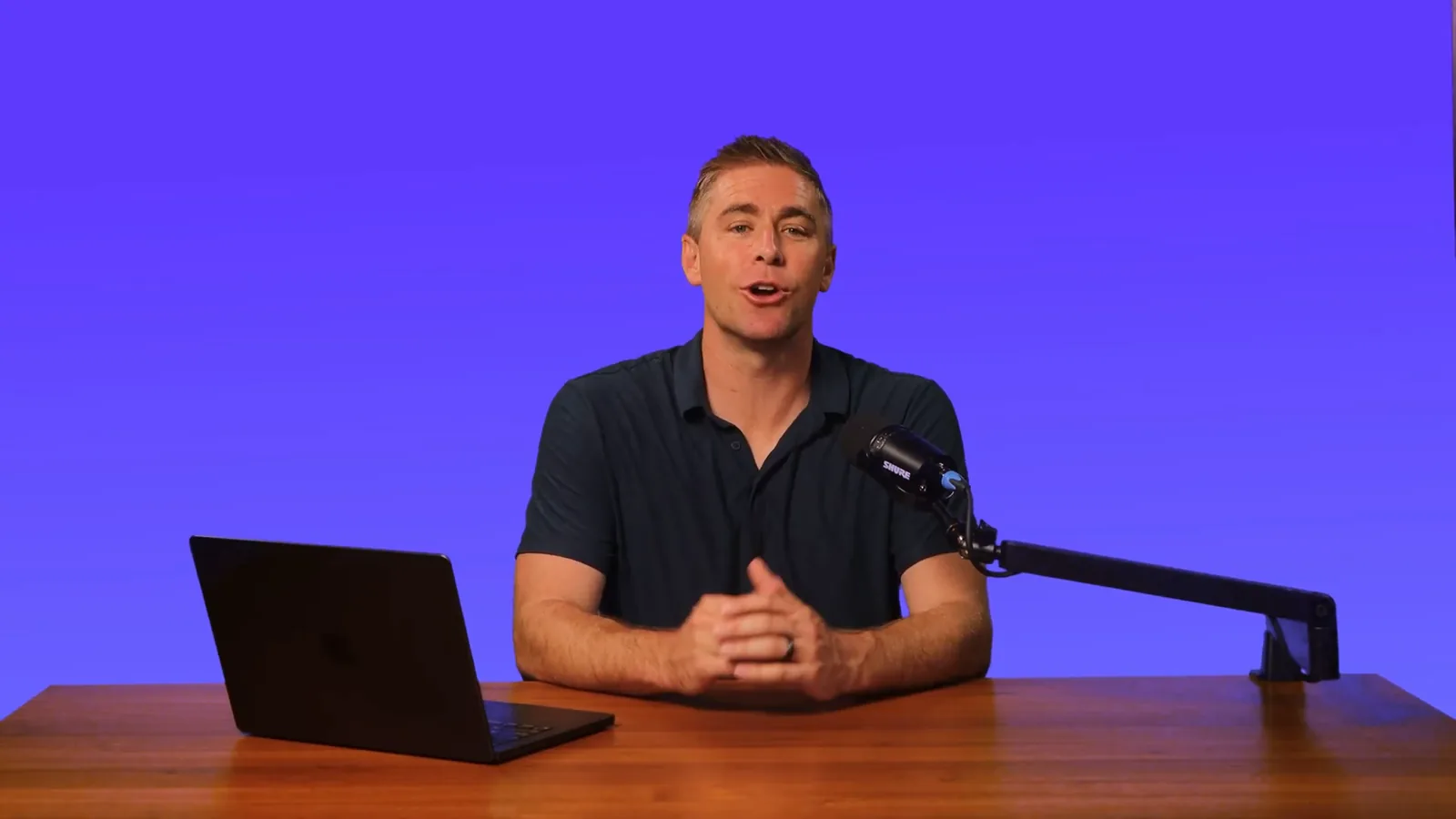
I'm a hired presenter, and I'll still say it. Most things should come from the CEO or founder, because they have the most knowledge and the most passion for the business.
Camera training pays off past the video, too. A CEO who's comfortable on camera is better at inspiring the team, talking to investors and more. If your CEO wants to do it, we'll help get them there.
So why does VideoRep exist? Because "whenever they can" turns out to be not very often. Two things block it: time and comfort on camera.
When Should a CEO Video Message Come from the CEO?
For anything that moves the company.
Launches, big news, a new direction, updates. If it's a company-level moment, the person running the company should say it.
A presenter can't fake that. The buyer, the investor and the employee all want to hear it from the top. When I'm asked to present one of those, I tell the client their CEO should do this one, not me.
The same goes for real opinion. If the video is the CEO's view of where the industry is heading, it should be the CEO saying it.
Why Do CEO Videos Stall?
Time, not talent. This is the CMO's pain, and it's the most common one I hear.
It goes like this. The CMO books the CEO for a shoot. Then it slips a week. Then two. Then a month, then two months. Before you know it, it's a brand-new quarter and that video still hasn't been shot.
Content never wins the CEO's priority list. Something else always matters more today, even though video is one of the things that can actually move the needle.
When the CEO does push through, it often looks like this. OtherWeb's CEO, Alex Fink, described the before-state himself: some of their videos "were done by me personally, recording myself on a webcam," and the rest went to whichever contractor bid on the job. Quality was uneven and each video took days. We stepped in as the presenter, walked through the app before the shoot so the demo was right the first time, and delivered two presenter-led videos in days. OtherWeb counts more than 30 hours of internal production time saved. In Alex's words, "The very first video we received was one of our best assets."
How Much CEO Time Does Each Option Take?
About an hour with a presenter.
Filming it themselves runs from a full day a month to 20 hours a week, depending on how much they make and how they make it.
| Setup | CEO time | What the CEO actually does |
|---|---|---|
| A spokesperson presents | About 1 hour, sometimes none | Approves the final cut, if at all. Usually the CMO approves |
| The CEO films a video now and then | About 2 hours a day per video | Films and reviews each one |
| The CEO films in batches | A full day once a month | Films a month of videos in one day |
| The CEO is always filming | 2 to 3 hours a week, up to 20 at high volume | Films every week |
These are my numbers from working with clients, not a study. They swing with volume, setup and process. But the gap is real.
Here's the extreme end. I worked with an IT-education founder whose business made about 60% of its income from YouTube. He was making six videos a week in batches. He was burnt out, he had three other projects, and he wanted the brand to stop depending on him alone. One day he wants to sell the business.
Can a Spokesperson Deliver Thought Leadership Video?
Yes, with a catch.
A spokesperson relays the team's expertise. It's communications through a video lens, the same job a regular spokesperson has always done. And a good one learns a lot along the way.
The catch is in that IT-education founder's story. He riffed off bullet points, because he's the expert. I'm not, so I need a script. Writing the script added a delay, and his reaction was fair: if we're making scripts, he might as well read it himself. He wanted someone who was a great presenter and also knew the field cold. There was only one person like that, and it was him.
“It’s very hard to transfer thought leadership.”
So we split it. I took the evergreen content that brings new people in. He kept the thought leadership, and that side turned into his personal brand. That split is the honest answer to the thought leadership video question. A spokesperson can carry your team's expertise to a buyer. Original opinion still belongs to the person who holds it.
One more thing matters more than reading a camera: only hire a spokesperson who actually cares about your brand.
- They’re interested in your product. Not just the booking. Ask what they’d want to know about it.
- They like your space. A presenter who enjoys the subject carries it better on camera.
- They communicate well off camera, too. Watch how they explain something on a call, not only on a reel.
- They’re curious. They ask questions about your buyers and your product before the shoot.
- They’ll learn the product first. A walk-through before the shoot gets the demo right the first time.
Spokesperson, CEO or Both: Which Fits Each Video?
Split it by the job. Here's how I'd call it.
| Video | Who should be on camera | Why |
|---|---|---|
| Product launch or big company move | CEO | It's a company-level moment. It should come from the top |
| Company news and customer updates | CEO | Trust comes from the person accountable |
| Industry point of view | CEO, or both | Original opinion belongs to the person who holds it |
| Video podcast or interview series | Both | The presenter hosts, the CEO answers |
| Evergreen explainers, FAQs and YouTube search videos | Spokesperson | Volume on a schedule, not on one calendar |
| Ads with many hooks to test | Spokesperson | Dozens of versions, one consistent presenter |
| Product demos and investor or sales pages | Spokesperson | Accurate, polished and fast, without a week of CEO time |
| Nobody on the team is comfortable on camera | Spokesperson | The video still gets made |
What Does Using Both Look Like?
The presenter makes it easy to say yes. The CEO only has to show up and answer.
The best version I've done is a video podcast for a telematics SaaS brand. I hosted. I asked the questions and came in a little. The founder carried the thought leadership in the answers. He didn't have to write anything or carry the show. He just had to be the expert, which he already was. The series did well, and I'm about to shoot another one.
That's the model: the CEO owns the thinking, the presenter owns the format. The same split works for the IT-education founder. He kept his opinions. I took the volume.
What if Nobody Wants to Be on Camera?
Then the video still gets made.
GNO Partners is a good example. Their static image ads had stopped working, and video was the obvious fix. But no one on the team was comfortable on camera, including the CEO. So one presenter carried all of it: 37 ads in three formats and a full-length VSL.
What about buyers who say their audience wants the founder, not a presenter? Some do. Audiences that need the founder are usually a specific community built around that person. That's a personal brand, and it's a different thing from business video content. Most B2B buyers just want their question answered by someone credible. One person isn't the whole story of a company.
If that's you, our video spokesperson service gives you one dedicated, vetted presenter for every video, so your content runs on a schedule instead of on the CEO's calendar.
What About an AI Avatar Instead?
Only for repeat jobs nobody owns. That's my view after 20+ years on camera, and after testing one myself.
On 6 November 2026 I went through Synthesia's stock avatars. My verdict: they're still not there. The people look real now, with real lighting, but the voice still doesn't quite match the person. The best results were characters, like a cartoon fox in a T-shirt, which honestly looked pretty good.
Real users are split. On Trustpilot, Synthesia rates 3.8 from 1,832 reviews and HeyGen rates 4.3 from 5,469 (both checked 16 November 2026). Happy reviewers praise ease of use, and one HeyGen user called the output a "polished, natural-looking presenter video in minutes." The unhappy ones mostly complain about credits, billing and cancelling, and some flag mispronunciations and unnatural delivery.
Where avatars do win is repeat, internal work. Synthesia's own case study says HENNGE, an IT company, uses custom avatars of two executives for quarterly investor updates and cut production from 5 days to 2.5. That's a vendor's claim, but notice what it is: the executives' own likeness, on a recurring update.
Where they lose is trust. In July 2024, UK lifestyle brand SheerLuxe introduced "Reem", an AI fashion editor, and was criticized for it, then apologized for not explaining her role clearly. When nobody owns the words, buyers notice.
My rule: AI in the edit bay, yes. On screen, never. AI avatars win the repeat jobs nobody owns. When trust is the product, a real person still wins. More on that trade-off in the Video Spokesperson hub and AI avatar or real human.
Want a Dedicated Video Spokesperson?
We'll look at the videos you need, and you'll get a quote within 24 hours.
Book a Call Free 30-minute call.FAQ
Should the CEO be in company videos?
Can a spokesperson create thought leadership video?
How much of the CEO's time does a spokesperson save?
What should a CEO video message include?
Is an AI avatar a good replacement for the CEO on camera?
- OtherWeb case study, VideoRep (live, read 16 Nov 2026): CEO Alex Fink on recording himself on a webcam, two presenter-led videos delivered in days, 30+ hours of internal production time saved. See videorep.co/results/otherweb.
- GNO Partners case study, VideoRep (live, read 16 Nov 2026): no internal spokesperson comfortable on camera, including the CEO; 37 ads and one full-length VSL. See videorep.co/results/gno-partners.
- Synthesia, “How HENNGE creates investor update videos in half the time” (vendor case study, read 16 Nov 2026): custom avatars of two executives, production cut from 5 days to 2.5. See synthesia.io.
- Trustpilot, Synthesia reviews: TrustScore 3.8 from 1,832 reviews, checked 16 Nov 2026. See trustpilot.com.
- Trustpilot, HeyGen reviews: TrustScore 4.3 from 5,469 reviews, checked 16 Nov 2026. See trustpilot.com.
- People of Color in Tech, “SheerLuxe faces backlash for introducing AI fashion editor as woman of color” (19 Jul 2024). See peopleofcolorintech.com.
- Eric Presnall, hands-on check of Synthesia’s stock avatars, 6 Nov 2026.