Plan Your VSL, Then Write the Script
Plan My VSL gives you the length, the framework, where your proof goes and the funnel videos around it, from six answers. Write My Script turns that plan into a script outline with a word count per section, plus the prompts to write every line in ChatGPT or Claude.
Framework
Length to Start With
Where Your Proof Goes
Why: our experience. B2B buyers book when proof comes early and is specific.
Funnel Videos to Make
Why: our experience building VSL funnels for B2B clients.
Metrics to Watch
- Play Rate
- Viewers Still Watching at the Ask
- Booked Calls per Viewer
Use your own player data. Every audience is different.
Script Outline
Plan first, then the outline writes itself.
Answer the six questions in Plan My VSL. The outline below fills in with each section, how many words it gets, and what to say in it.
Word counts assume about 140 spoken words a minute, the rate the prompt pack uses.
Write Every Line: the VSL Script Prompt Pack
Nine prompts for ChatGPT or Claude: an interview prompt, three framework prompts, the funnel video prompts, and a self-check.
Free, weekly newsletter included. Powered by Beehiiv. Unsubscribe in one click.
You're in. Open the pack below.
Open the Prompt PackWhat VSL Stands For
VSL stands for video sales letter. It started as the long written sales letter direct-response copywriters have used for a century. Put a real person on camera reading the argument out loud, and you get a VSL.
The structure stayed the same because it follows the order a skeptical buyer asks questions in. What changed is that the letter is now a person. And viewers decide whether to trust that person in seconds.
Does a VSL Work for B2B and SaaS, or Only Info Products?
It works for B2B when two things are true. The offer is specific, and the next step is a conversation.
Most VSLs people picture are consumer infomercials, 20 to 40 minutes of hype selling a course. B2B buyers are different. They're analytical, protective of their time, and judged on numbers. A B2B VSL doesn't try to close the sale. Its only job is to sell the value of the call.
Two real examples show the range:
- Leadbird, a B2B lead generation agency, runs a 21 minute VSL on its homepage, surrounded by named client results. The same video plays again on their booking confirmation page, to pre-sell the call.
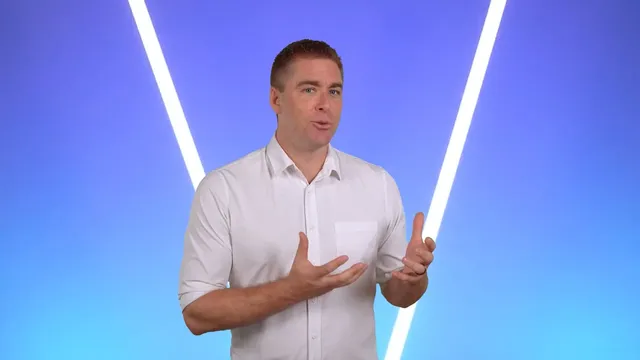
- Monaco, a sales automation startup, launched with a 1:56 founder video from Sam Blond on LinkedIn. One idea, the product shown doing it, posted where the buyers already are. That's a micro-VSL.
 6:10
I've made VSLs for B2B companies like GNO Partners (one VSL plus 37 ads) and EyeFly Digital (a VSL plus three ad hooks, 24 hours from shoot to handoff). I've also worked inside big funnels outside B2B. The best of those was built with Mike Balmaceda's team at Amplify HQ, who launch digital programs for some of the biggest names in the entrepreneur world. On The Elevation Group funnel, we shot five ads, one VSL and a booking confirmation video, all with the same face. Mike is by far one of the best script writers I've worked with. He doesn't just cover the pain point. He learns the audience's real experiences and builds the story around them.
How Long Should a B2B VSL Be?
As long as it takes to answer the buyer's real objections, and not a minute more. That's the only rule every honest source agrees on. AWAI says it plainly: there isn't a rule.
Here's where we start, by where the viewer comes from:
| Where viewers come from | Length we start with | Its job |
|---|---|---|
| Cold email or LinkedIn outreach | 60 seconds to 2 minutes | Spark curiosity and get a reply |
| Landing page, from ads or a lead magnet | 5 to 8 minutes | Build trust, filter out poor fits, book the call |
| Retargeting, or warm traffic | 10 to 15 minutes | Go deep on how it works, handle objections, stack proof |
On a landing page, seven to eight minutes is where my B2B VSLs usually land. To be clear, that's our experience, not an industry law. Nobody has published a controlled test of VSL length against booked calls.
What the data does show is a pattern:
- Wistia found engagement barely changes between one and five minutes, then drops for videos over five minutes (Wistia State of Video 2024).
- But a 30 to 60 minute video gets about half the engagement of a short one, and over ten times the total watch time (same report).
- Wistia calls 5 to 30 minutes the "convert or nurture" band, with a 9% average click-through rate (Wistia, optimal video length).
So fewer people finish a longer video. But the right buyer stays. I've always believed the right audience will stick around as long as it takes, because they're such a good fit. It's the same reason you'll watch an hour of YouTube from someone in your niche. If it's directly in line with your goals, you take in everything.
Once your VSL is live, your own retention graph beats any benchmark.
Messaging Comes First
Messaging is the most important part of a VSL. One VSL is for one message, to one audience, about one pain point. You can, and should, have many VSLs for different audiences. But each one does one job.
B2B buyers are skeptical. They need higher trust before they book. So the message has to be specific in five places:
- The buyer. Name who it's for in the first 30 seconds: the title, the company type, the stage.
- The pain. Not "you want more revenue." The annoying task their team does every Monday morning.
- The metric. The number they're judged on, and how far it moves.
- The mechanism. How your process works, explained so a logical buyer can follow it.
- The proof. Named clients, real numbers, the before and after. Proof is where the biggest VSLs win.
That's why a real VSL script starts with an interview, not a template. The writer has to understand the buyer and this specific pain point before writing a word. Set a clear goal for the video too: it's meant to sell for you while you sleep, so decide upfront which number it has to move.
Three B2B VSL Frameworks
Every framework uses the same spine: the hook, the problem, the proof, the ask. What changes is the order and the weight.
1. Problem, Agitate, Solve (Best for Cold Traffic)
- Hook (10%)
- Problem and Agitate (25%)
- Mechanism (30%)
- Proof (20%)
- Ask (15%)
The most reliable structure for cold B2B traffic, and the oldest. PAS is a direct-response staple Dan Kennedy is widely quoted calling the most reliable sales formula ever invented.
- Hook: a specific result or a painful problem, said plainly.
- Agitate: why what they've tried isn't working, and what doing nothing costs.
- Solve: your mechanism, step by step.
- Proof: case studies with names and numbers.
- Ask: one low-friction next step, usually booking a call.
2. The Case Study VSL (Best for Retargeting)
- Before (20%)
- The Turn (15%)
- The System (30%)
- After (20%)
- Ask (15%)
B2B buyers trust peers more than vendors. A TrustRadius study of 1,862 tech buyers found demos, trials, past experience and user reviews influence them most. So this VSL is built around one client's story.
- Before: where a recognizable client was stuck.
- The turn: the decision or strategy that changed it.
- The system: how it was done, step by step.
- After: the result, in numbers.
- Ask: "If you want this for your company, book a call."
3. The Interactive VSL (Best for Complex Sales With Several Roles)
- Intro, 2 minutes
- One branch per role, 3 to 5 minutes each
When a CFO, a CMO and an operator all watch the same video, one script can't answer all three. An interactive VSL starts with a short intro, then asks the viewer to pick their role or biggest problem, and plays a shorter answer made for them.
Tools like Vidalytics and Mindstamp support branching video. This is the newest and least proven of the three. The closest evidence is next door: when Navattic tested an interactive product tour where visitors picked their role, demo requests rose 45% (a small test, below the usual confidence bar). Use it when different roles genuinely need different answers.
Delivery: What Great Looks Like
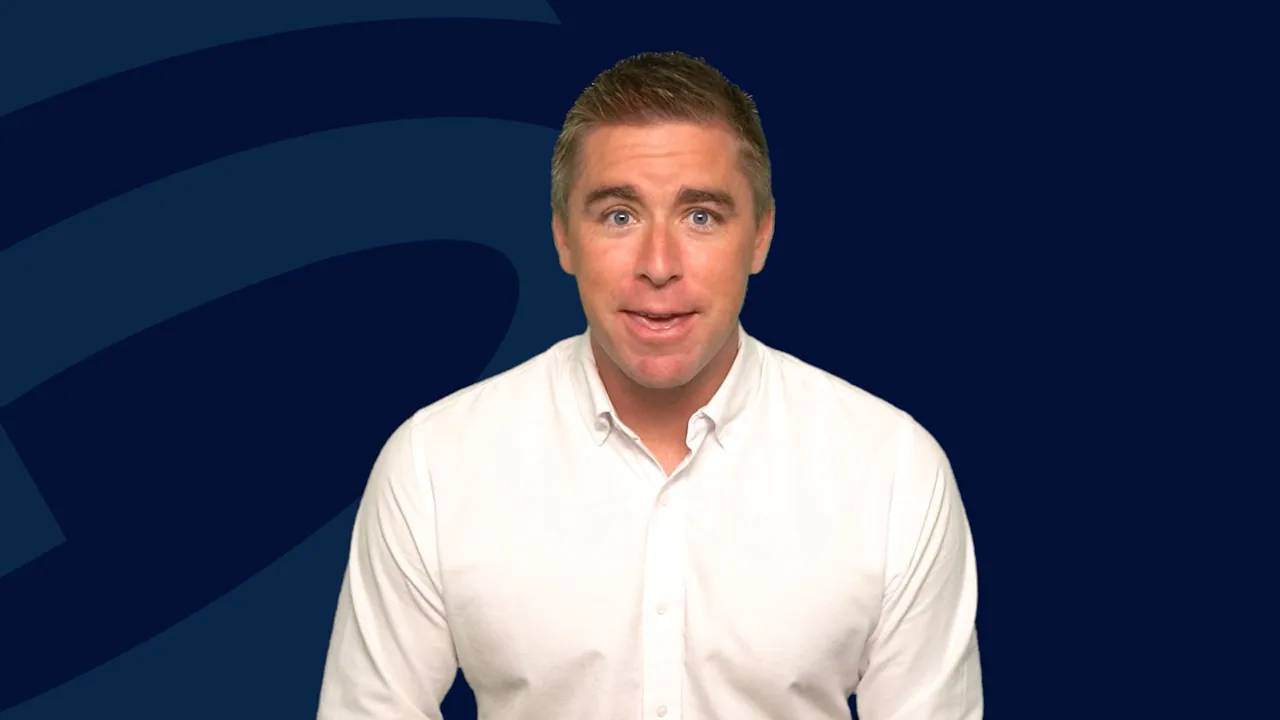
Great delivery is authentic. It's the person behind the message, not someone reading a teleprompter, and it's not stagnant.
Monaco's launch video is a good model. Sam Blond, the founder, put himself out there, and the delivery is natural. A lot of my clients use it as a reference.
What kills a VSL is anything that screams salesy. "Give me your money" instead of "I want to help you solve this." A good VSL helps the viewer solve their problem, then proves you've done it before.
Keep the same face across the whole funnel. The person in the ad should be the person in the VSL and the person in the confirmation video. Whether that's the founder, the CMO or a dedicated presenter, the consistency is what builds trust. You can add variety, but usually lower in the funnel, or in retention content after the sale.
The Trifecta: Message, Delivery, Visuals
Think of it as a Venn diagram. You need all three, and they matter in that order.
- Message and delivery are good, visuals are rough: it still works. Polish helps, but it isn't the end-all.
- Delivery and visuals are good, the message misses: they tune out. It isn't a fit.
- Message and visuals are good, delivery is off: it feels fake, and they leave.
Visuals come last. A clean background helps, and graphics should back up the presenter's points. But no production budget saves a weak message.
What Is a VSL Ad?
A VSL ad is the short ad that sends people to the VSL. It has one job: earn the click. Make several hooks for the same VSL, cut for each platform (vertical, square and landscape), and test which hook brings the best viewers, not just the most.
How to Make a VSL, Step by Step
- Interview. Get the buyer, the pain, the metric, the mechanism, the proof and the objections on record before you write.
- Script. Pick the framework that matches your traffic. Write it to be spoken, not read.
- Film. One presenter, talking to one person. Natural delivery beats perfect takes.
- Edit. Captions, chapters, and graphics that support the points.
- Place it. On its own landing page with one call to action, booking a call. Not on your homepage.
- Measure. Play rate, how many people are still watching at the call to action, and booked calls per viewer. Then fix the weakest point.
The Videos Before and After Your VSL
A VSL with no traffic is a monologue. And a booked call with no preparation is a cold start. These are the funnel videos that make the biggest difference, and they're the ones we make:
- The Ads
- The VSL
- Confirmation Video
- The 80% Video
- Follow-Up Video
- The ads. Several hooks that bring the right people to the VSL.
- The VSL. The main argument, on its own landing page.
- The confirmation video. Plays right after someone books. It does two things: reminds them to accept the calendar invite, and tells them to watch one more video before the call.
- The 80% video. The answers to the questions you hear on 80% of your sales calls, sent before the call. It's a "They Ask, You Answer" idea from Marcus Sheridan. Buyers show up already knowing the basics, so the call can go straight to their specific situation. It lifts show rates and call quality.
- The follow-up video. For people who watched most of the VSL but didn't book. It answers the last objection and repeats the ask.
We make the whole set, with the same presenter in every video. See how we make VSLs and the videos around them.
How Much Does a VSL Cost?
Most single VSLs we make land under $5,000. A full funnel (the ads, the VSL, the confirmation and 80% videos) is quoted per project, because it depends on how many videos you batch and how much editing you need. The price moves with length, the number of ad hooks, the editing level and the usage rights. See how VideoRep makes VSLs, or read what drives video production cost.
What moves a VSL quote
- Length
- Number of Ad Hooks
- Editing Level
- Usage Rights
Get Your VSL Plan
Use Plan My VSL and Write My Script above for a free plan, a script outline and the VSL Script Prompt Pack. Or see how we make VSLs and book a fit call; we'll plan it with you.
Book a Fit CallFAQ
How long should a B2B VSL be?
What's the difference between a VSL and an explainer video?
Can AI make my VSL?
VSL or webinar?
Where should a VSL live?
- Wistia, State of Video 2024: engagement by length, and total watch time for 30 to 60 minute videos. See wistia.com.
- Wistia, optimal video length: the 5 to 30 minute "convert or nurture" band and its 9% average click-through rate. See wistia.com.
- AWAI on VSL length. See awai.com.
- TrustRadius 2026 B2B buying report, 1,862 tech buyers. See hginsights.com.
- Navattic, persona-based interactive demos: demo requests up 45% in a small test. See navattic.com.
- Client work: the GNO Partners, EyeFly Digital and Elevation Group case studies.